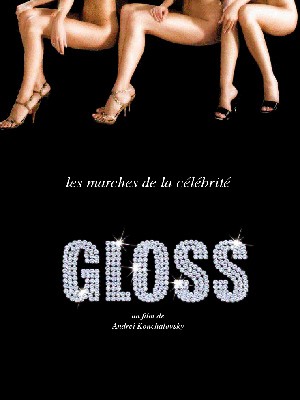





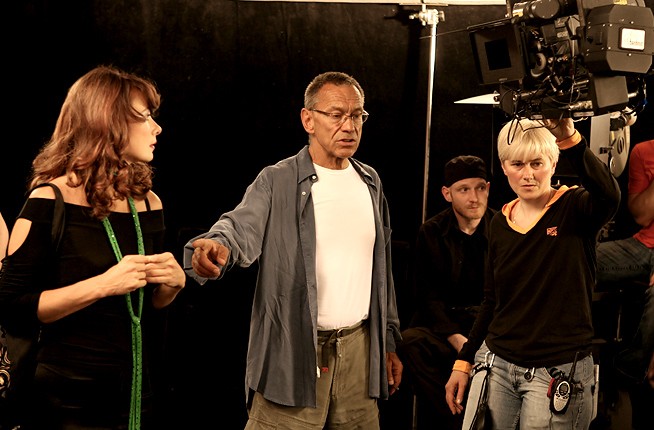
One day, on the last page of the Komsomolskaya Pravda newspaper, Andrei Konchalovsky saw a touching photo of a provincial girl in the Miss KP section. The director still keeps that photo because it inspired him to make a film about a provincial girl's elusive dream of becoming the cover star of a glossy magazine. Gloss has become an accurate metaphor for the Russia of today - with TV screens that zombify people's minds and paper stands replete with fashion and celebrity publications, which sell themselves under the heavy load of subtly promoted products. The script was written by Andrei Konchalovsky and screenwriter Dunya Smirnova. The director had long dreamed of making a movie about our world today, where life and art are determined by consumers' demands, where the price has become more important than the meaning and artistic value. This glossy world is not about knowing how to publish a glossy magazine. It is about being able to sell a lifestyle, without knowing, however, what the consequences will be. On the film set, Andrei Konchalovsky liked repeating the slogan which was born while they were making the movie: "Smart people do not read glossy magazines, they publish them". Julia Vysotskaya was chosen to play the lead. To prepare for the role she went to the small town of Novocherkassk, where she was actually born, to see for herself how young provincial girls live, what clothes they wear, what their hairstyles are like, what they talk about. The film's plot strongly echoes reality, which is why many of the names and physical appearances of characters are based on real figures from the "crème de la crème of high society". Julia Vysotskaya's character Galya enters a world where money rules and talent only grants one the right to serve it. Andrei Konchalovsky summaries it very well: "In this life you can have anything you want; all it depends on is how much you are willing to pay for it."
Gloss is a Russian-style dolce vita. From the earliest stage of the film I knew that I would have a part in it. I had watched with my very own eyes as the script had been written, Dunya and Andrey worked on it together at our house in Italy, and in our home on Nikolina Gora. In fact, I was really a kind of partner in the process, if only because I used to feed them! So there wasn't a precise moment in which I was handed the script and I suddenly thought ‘Wow, what a role!’. I had witnessed this baby called Gloss being conceived and born."
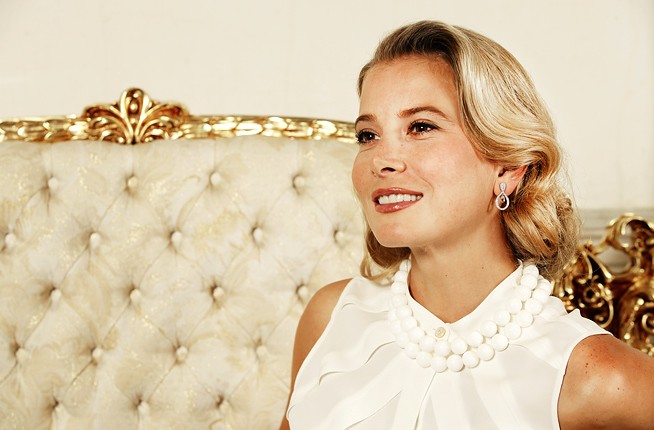
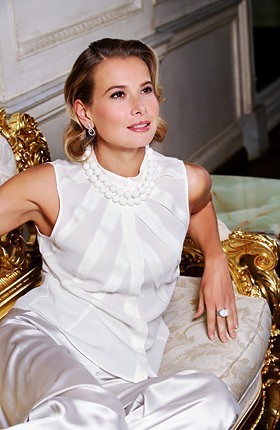
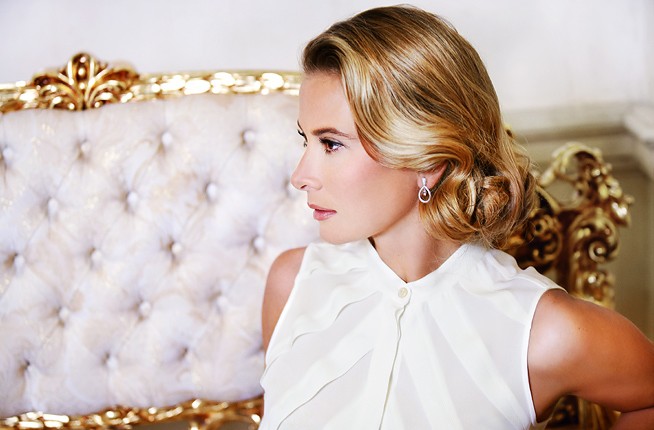
"The idea of using Grace Kelly’s image was the director's. It is exactly that image that the film’s main character adopts. Julia is very similar to Grace, it is an amazing coincidence. All we needed to do was find the correct angle."
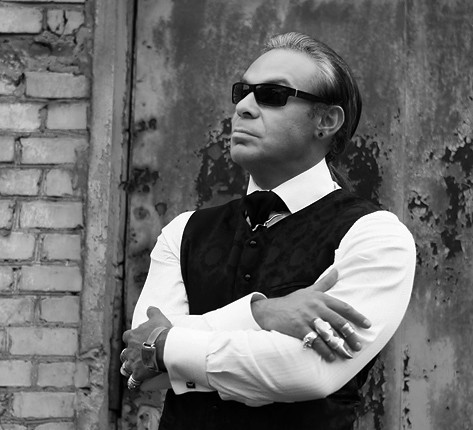
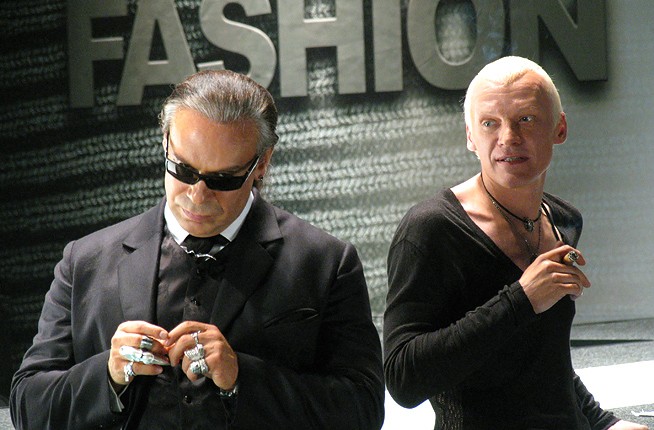
"We decided to make him into the archetypal couturier, a renowned fashion designer. They are all very similar. Certain professions give people very similar traits. They decided to call my character Mark Shiffer, so he even got half of my real surname. Of course wearing the Lagerfeld look was also part of it. My character is an ambitious, obnoxious and pretentious couturier who is at the top of the ladder but later becomes very unsuccessful. He sees himself as a kind of little Napoleon. He wears all of Lagerfeld's accessories -the longer silver chains, rings, his famous plait and noble gray hair- but, sadly, has none of his talent. The day I got the script, I read it through the night. And I kept saying to myself: ‘Oh, Konchalovsky, you son of a bitch!’, because the script’s anti-gloss sentiment really fitted in well with my dislike of that world! I thought: how is that no one before him has ever tried to take a swing at this chimera? At this crazy moral compass where everything is fake, everything is for sale. Everything has a label saying "buy me!" The best thing about the film is the sword that it raised over that world. What was it they used to say during Perestroika? ‘You can't live like that!’ I think they were referring to poverty. Now we can also apply those words, but this time referring to richness and abundance."